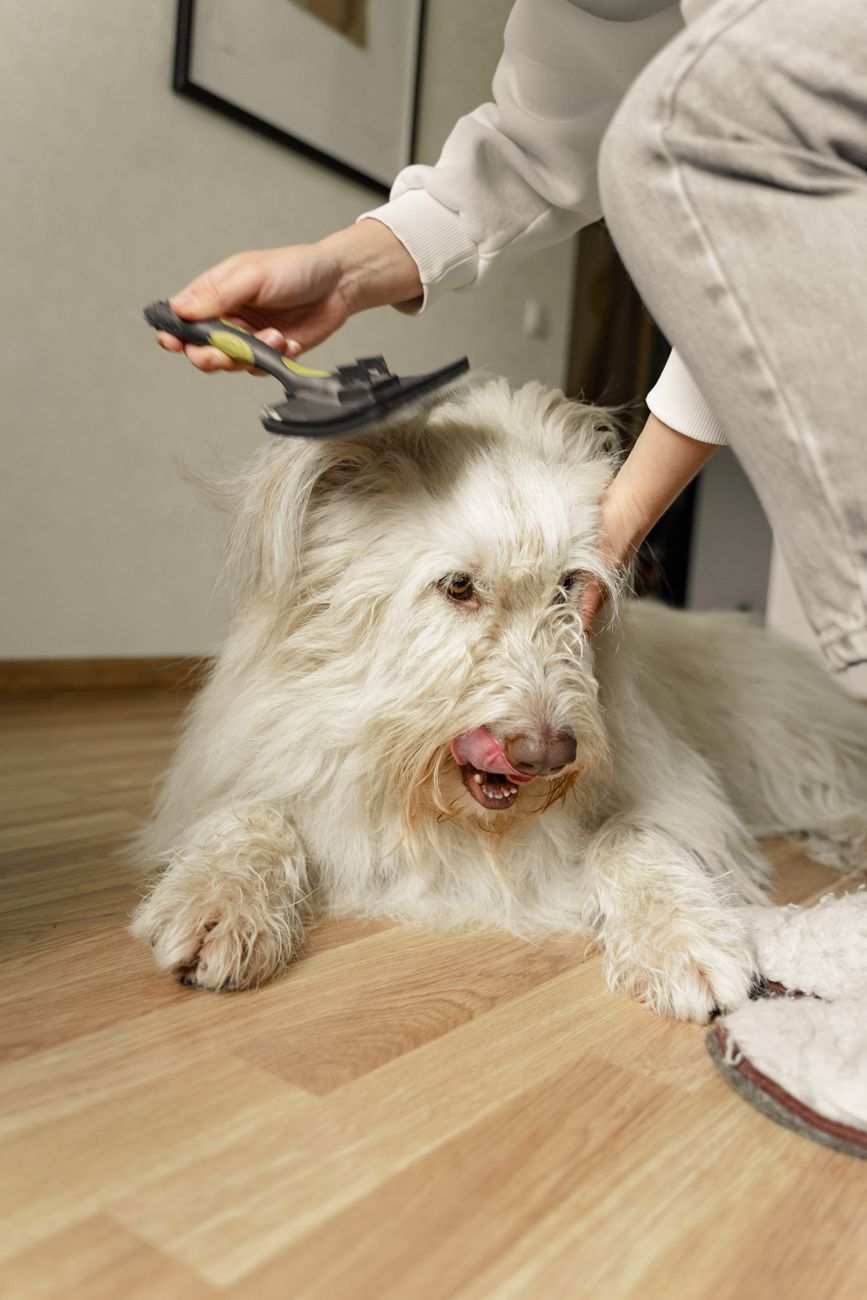
To brush your dog's teeth safely, introduce the taste and touch gradually instead of opening the mouth by force.
Updated August 12, 2026, after a fresh review, with updated visuals and links.
Daily brushing supports dental care, but it does not replace veterinary examinations when there is pain, bleeding, or strong odor.
What You Need
- Pet toothpaste made for dogs
- A soft pet toothbrush or finger brush
- A towel
- Small rewards
Step 1: Let Your Dog Taste
Offer a tiny amount of pet toothpaste on your finger and reward calm interest. Never use human toothpaste unless a veterinarian specifically says it is safe.
Step 2: Touch the Lips
Gently lift the lip for a second and touch the outer teeth. Stop while your dog is still comfortable.
Step 3: Brush the Outside
Use small circles on the outside surfaces where plaque collects. You usually do not need to force the mouth wide open.
Step 4: Build the Routine
Start with a few teeth and add more over several days. End with praise and keep the session calm.
What to Avoid
- Using human toothpaste: Some ingredients are unsafe for dogs.
- Rushing the first session: The brush can become a source of fear.
- Ignoring bad breath: It can signal a dental problem.
Final Thoughts
Brushing your dog's teeth works best as a gradual, reward-based routine with pet-safe products. Keep sessions short and use veterinary care for problems you can see or smell.
