A flat tire has a special talent for lonely roads and bad weather. The good news: the car already carries everything you need, and the job takes about twenty minutes.
Updated August 09, 2026, after a fresh review, with updated visuals and links.
Read this once at home and the roadside version becomes a calm routine instead of a panic.
Short version: Get safe first, everything else after first, then loosen the lug nuts before lifting. Details below.
Here's how it works
- Get safe first, everything else after. Hazards on, pull fully off the road onto flat ground, parking brake set, everyone out and away from traffic. A soft shoulder on a hill is where you call roadside assistance instead, no shame in that.
- Loosen the lug nuts BEFORE lifting. Half a turn counterclockwise each, while the wheel holds still on the ground. Some need your body weight on the wrench: step on it carefully. This trick saves the whole job.
- Jack at the factory point. Every car has notches or reinforced pads along the sill near the wheel: the manual shows them. Place the jack there exactly, lift until the flat clears the ground by an inch or two.
- Ground uneven? A flat board under the jack helps
- Never put any body part under the car while it's on the jack
- Car on jack plus you under it equals emergency room, full stop
- Swap the wheels. Nuts off, into your pocket or the hubcap immediately (they roll away like they have somewhere to be), flat off, spare on, nuts started BY HAND to avoid cross threading. Tighten them snug in a star pattern.
- Lower, then torque in a star pattern. Car down, jack away, now wrench the nuts properly tight, again in a star or crisscross order. Firm effort is the target, chasing numbers with roadside tools is unrealistic.
- Respect the spare's limits. Most spares are temporary donuts: 50 mph (80 km/h) max, about 50 miles of range. Drive straight to a tire shop, not 'until the weekend'.
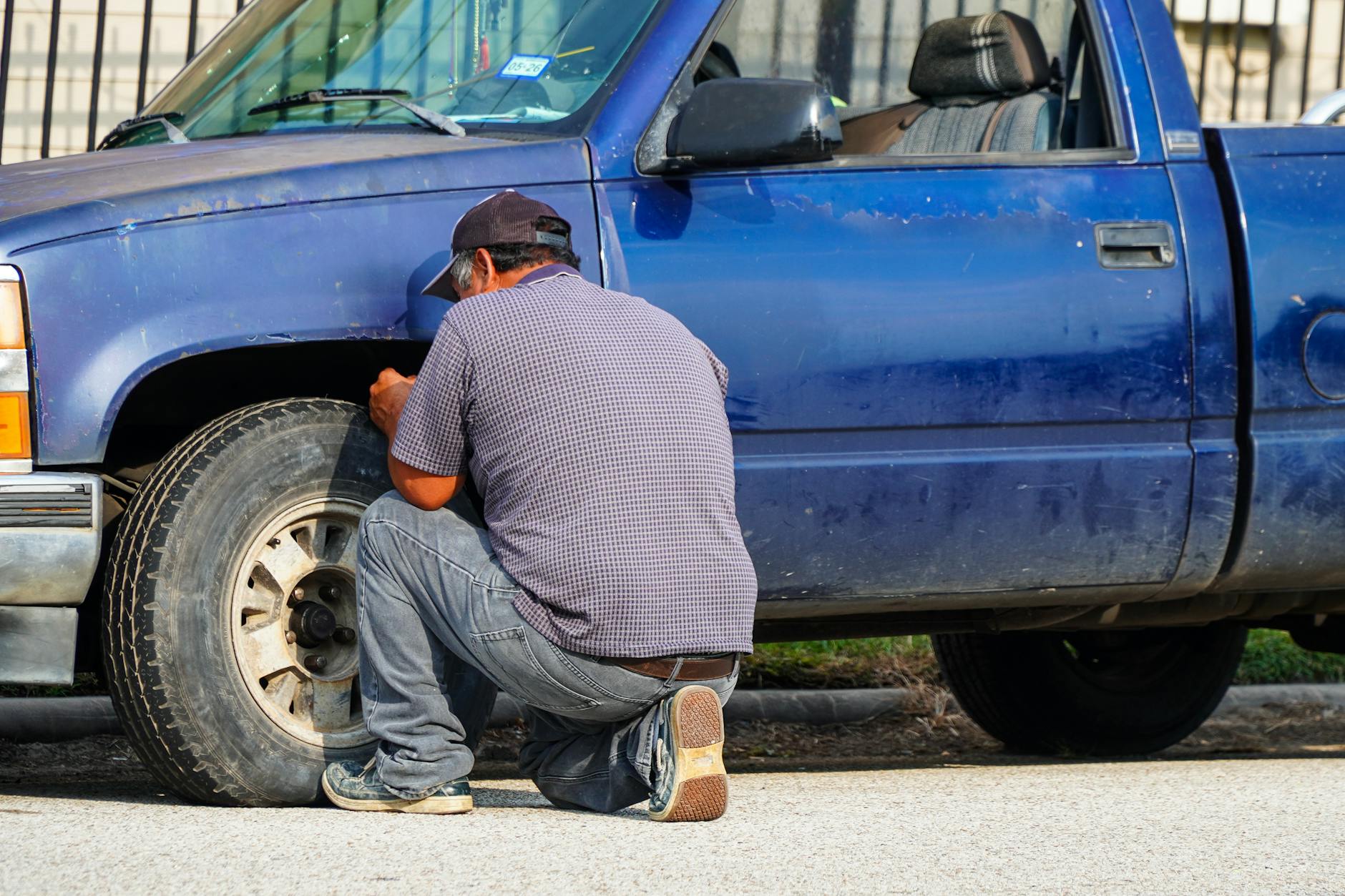
Tips that actually help
- Check spare pressure twice a year: a flat spare is a plot twist nobody needs.
- A kneeling pad (trunk cardboard works), gloves and a headlamp live cheaply in the trunk and pay for themselves the first night flat.
- New wheel fitted? Retorque the nuts after 50 miles of driving, metal settles.
Quick answers
How long does a donut spare really last?
It's rated for short distances, typically around 50 miles. Treat it as a ride to the tire shop.
Can I fix the flat instead?
Small tread punctures are very repairable at shops for little money. Sidewall damage means replacement.

Keep reading
- How to Replace a Headlight Bulb Yourself (and Not Touch the One Thing You Shouldn't)
- How to Replace Windshield Wiper Blades in 3 Minutes
- How to Replace Your Engine Air Filter (The 5-Minute Job Mechanics Charge $40 For)
Chock, crack the nuts, jack at the notch, star pattern twice: twenty minutes of method beats two hours of roadside despair.
