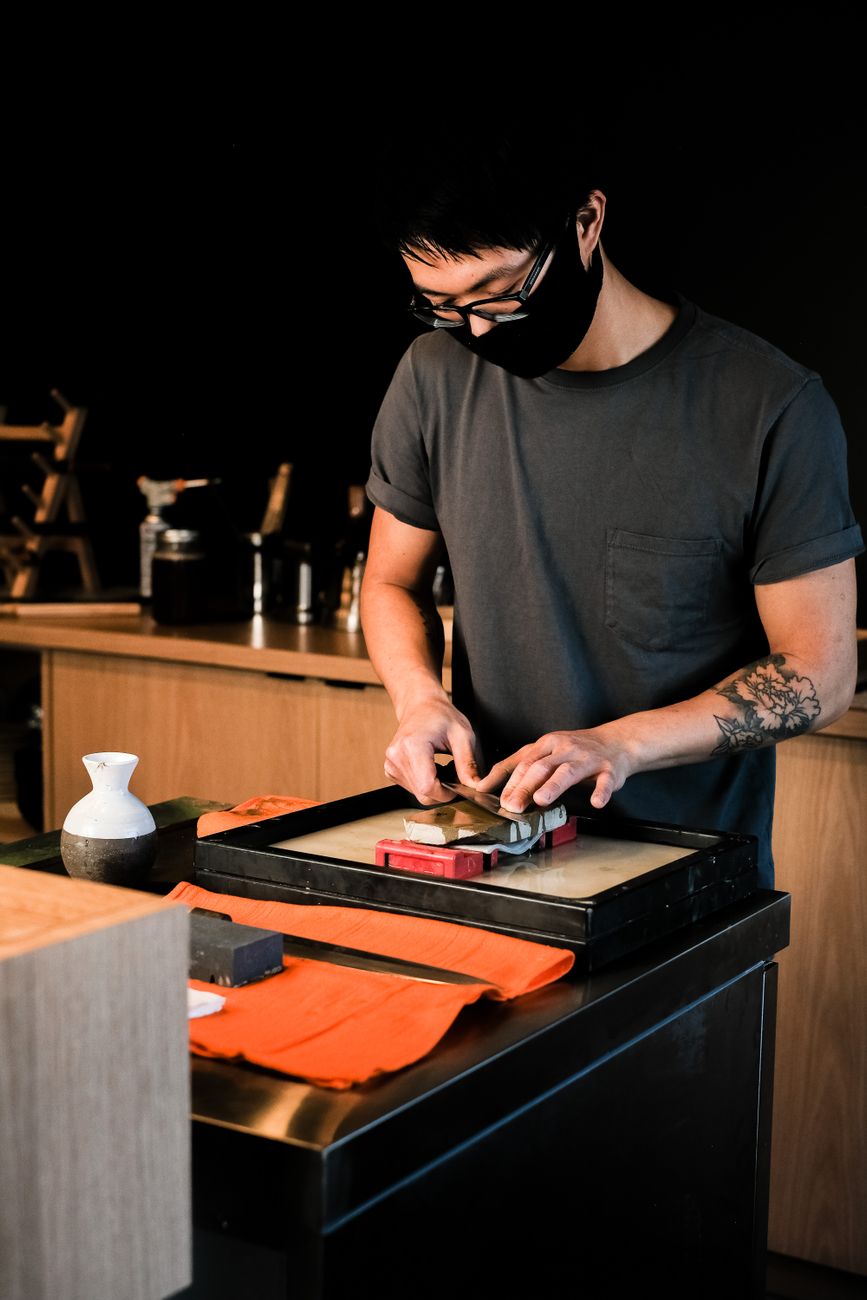
To sharpen kitchen knives, stabilize the tool and use controlled passes instead of pressing harder.
Updated August 12, 2026, after a fresh review, with updated visuals and links.
A sharp knife is easier to control than a dull one, but sharpening equipment must be used carefully and kept away from children.
What You Need
- A whetstone or quality pull-through sharpener
- A damp towel to prevent slipping
- Water if required by the stone
- A clean cloth
Step 1: Secure the Sharpener
Place the stone on a damp towel or use the base supplied with the sharpener. Make sure it cannot slide while you work.
Step 2: Follow the Angle
Hold the blade at the angle recommended for your tool. Use light pressure and move through the full edge rather than sharpening one small spot.
Step 3: Repeat Evenly
Make the same number of passes on both sides when the sharpener requires it. Slow, consistent movement is safer than speed.
Step 4: Clean and Test
Wipe the blade, rinse it if the instructions allow, and test it on a piece of paper or a soft food. Store it in a block or guard.
What to Avoid
- Using too much pressure: It can remove metal unevenly.
- Ignoring the heel: The whole cutting edge needs attention.
- Leaving metal dust: Clean the work area and knife before cooking.
Final Thoughts
Safe sharpening depends on a stable setup, light pressure, an even angle, and careful cleanup. Stop if the tool feels uncontrolled or the edge is damaged.
